Private Key Control and Wallet Functionality
Self-custody places the private keys to cryptocurrency in the hands of the user rather than a centralized exchange or third party. Because blockchain coins exist as records on a public ledger, the private key acts as the secret number that proves a user has the right to spend them. This removes the risk of a custodian freezing funds. However, it leaves the user solely responsible for security. If an exchange collapses, is hacked or freezes withdrawals, customers can lose access to their funds. This risk became evident when the collapse of FTX in November 2022 left millions of users unable to withdraw their funds.
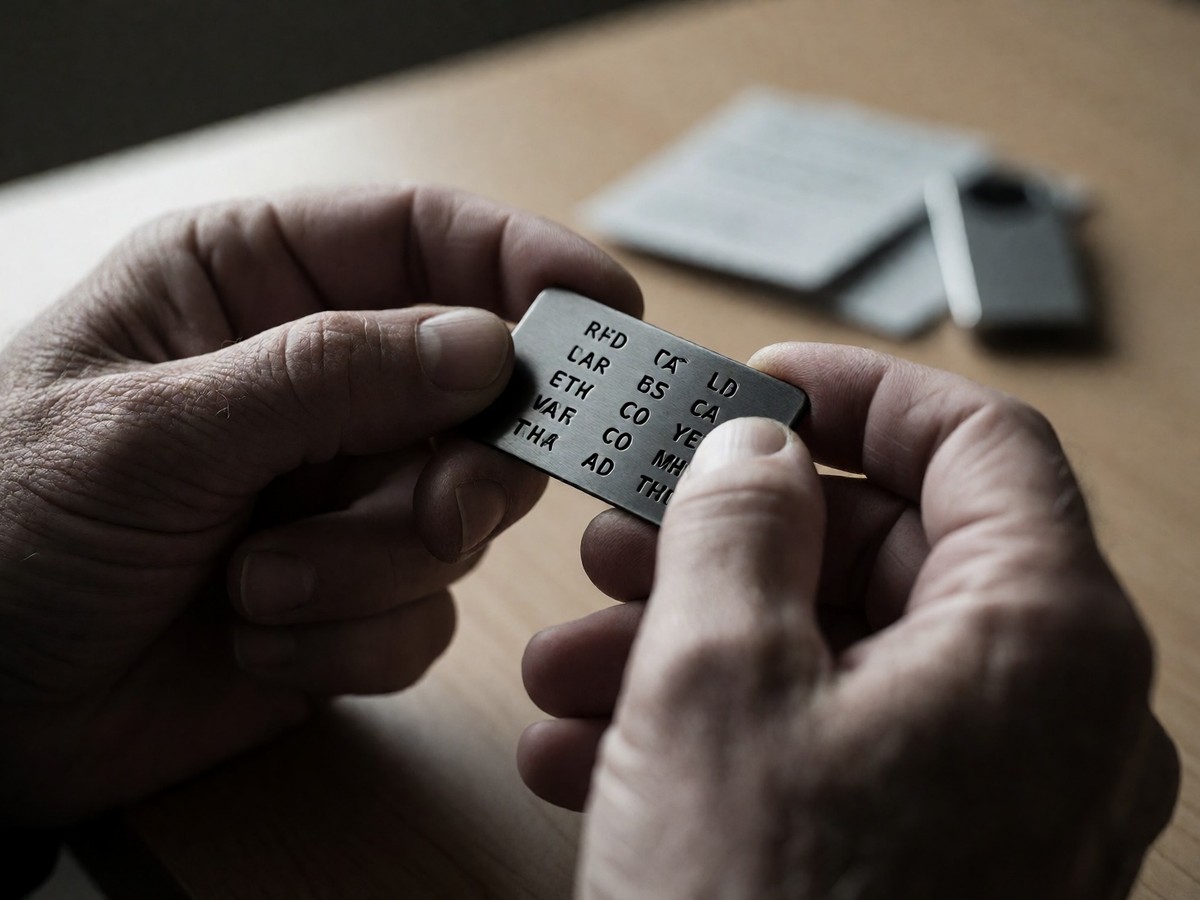
Self-custodial wallets generate a seed phrase, typically a list of 12 or 24 words, to serve as a human-readable backup. Anyone with this phrase can recreate the wallet and move funds on another device. To stay safe, users must protect this phrase by writing it on paper or stamping it into metal and storing it offline. Never type the phrase into a website, share it, or save it in a cloud file. The most common risk for holders is losing these keys. Welshman James Howells says the keys to about 8,000 BTC are on a hard drive that was thrown out in 2013 and buried in a landfill in Newport, Wales.
Wallet Categories and Security Threats
| Wallet Type | Connectivity | Key Storage Method |
|---|---|---|
| Software | Internet-connected | On a device (phone, computer, or browser) |
| Hardware | Offline | On a small device |
| Air-gapped | No internet, Wi-Fi, Bluetooth, or USB | Offline via microSD or QR codes |
| Multi-signature | Variable | Requires multiple keys to approve transactions |
Users choose different setups based on their needs for convenience or security. Software wallets, such as MetaMask, provide ease of use through apps but face phishing and malware threats. Scammers often pose as wallet support staff to trick users into handing over seed phrases. Hardware wallets keep keys offline, while multi-signature wallets require more than one key to approve a transaction, meaning a single stolen key cannot drain the funds.
Security flaws in hardware can lead to massive losses. In July 2026, a firmware vulnerability in Coldcard, a Bitcoin-only air-gapped hardware wallet, allowed attackers to reconstruct some users’ seed phrases. According to Galaxy Research, losses rose to nearly $114 million in Bitcoin within days of that vulnerability. Physical threats also persist for those holding large amounts of assets. Blockchain security firm CertiK verified 52 wrench attacks worldwide in the first half of 2026, which is an increase from the 39 attacks recorded a year earlier. Chainalysis said these violent attacks were on pace for a record year.
To move crypto off an exchange, a user must follow several specific steps. A user must choose a wallet that supports their assets and set it up by backing up the seed phrase offline. After copying the receiving address from the wallet, the user should send a small test transaction from the exchange to confirm it arrives. Once the test works, the user should withdraw the rest, making sure to select the right blockchain network.
Regulation and AI Integration
Regulators have attempted to implement rules for "unhosted" wallets, though recent developments show resistance. The U.S. Treasury’s Financial Crimes Enforcement Network withdrew a 2020 proposal that would have required banks and money services businesses to keep records on transactions with self-custodial wallets over $3,000 and report those over $10,000. In France, the Senate rejected a plan in November 2026 that would have required holders to declare self-custodied crypto worth more than €100,000. Holders have pushed back against such proposals because they fear such records could leak.
Technology is expanding to include non-human users. In 2026, MetaMask launched Agent Wallet, which lets AI agents execute on-chain trades within user-set limits, while Coinbase also introduced self-custodial wallets for AI agents. Wallet makers are working to make self-custody easier for newcomers with features such as social logins and passkeys.