

Arthur Hayes Flags Solvency Risk in Tether’s Bitcoin and Gold Strategy
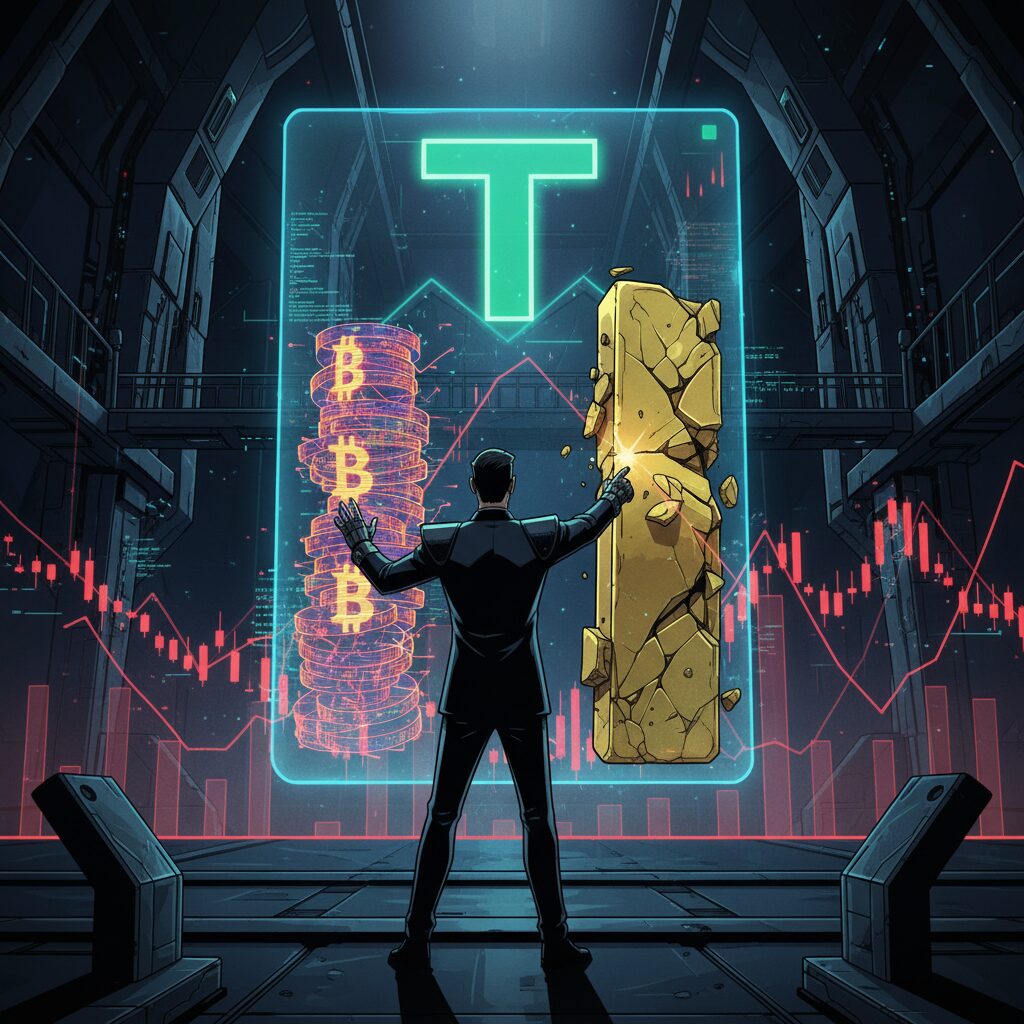
BitMEX co-founder Arthur Hayes has raised concerns over Tether’s financial strategy, warning that the stablecoin issuer is engaged in a high-risk interest rate trade that could jeopardize the solvency of its USDT token.
Analyzing Tether’s latest attestation report, Hayes noted that the company holds significant non-cash assets, including $9.86 billion in Bitcoin and $12.92 billion in precious metals. He calculated that a 30% decline in the combined value of these holdings would be sufficient to eliminate Tether’s equity cushion, potentially rendering USDT insolvent.
A High-Stakes Bet on Interest Rates
Hayes argued on X that Tether appears to be betting on future interest rate cuts by the Federal Reserve. Such a move would likely cause the value of its Bitcoin and gold to increase significantly. However, it would simultaneously crush the interest income Tether earns from its massive holdings of U.S. Treasury bills and other fixed-income assets.
“The Tether folks are in the early innings of running a massive interest rate trade,” Hayes posted, suggesting that the company is buying assets that should theoretically perform well as the price of money falls. He predicted that large USDT holders and exchanges will soon demand real-time balance sheet access to monitor these emerging solvency risks.
Debate Over Asset Allocation
One social media user countered Hayes’ analysis, explaining that Tether’s Bitcoin and gold acquisitions are funded from company profits and excess reserves, not from capital backing newly issued USDT. “They only mint when there’s demand, and the BTC/gold allocations are made using the surplus they generate,” the user wrote.
Hayes remained skeptical, questioning the math behind that explanation. “That was my assumption as well, but then why are their cash assets… less than outstanding liabilities? What am I missing here?” he replied, highlighting a potential discrepancy in the company’s balance sheet.
Tether Winds Down Uruguay Mining
In other company news, Tether confirmed it is shutting down its Bitcoin mining venture in Uruguay following failed negotiations over electricity pricing. The company is reportedly letting go of about 30 of its 38 local staff members as it winds down the operation.
According to its latest report, the stablecoin issuer’s total reserves stand at $181.22 billion. U.S. Treasury bills make up the largest portion of its holdings at $112.42 billion, followed by $17.99 billion in overnight reverse repurchase agreements and $6.41 billion in money market funds.
Disclaimer: The information provided in this article is for informational purposes only and does not constitute financial advice, investment advice, or any other sort of advice. You should not treat any of the website’s content as such. Always conduct your own research and consult with a professional financial advisor before making any investment decisions.
Related Posts







Subscribe to us and get the latest crypto news